Foot Health Guides
Walking shoes and running shoes: Which differences matter to comfort?
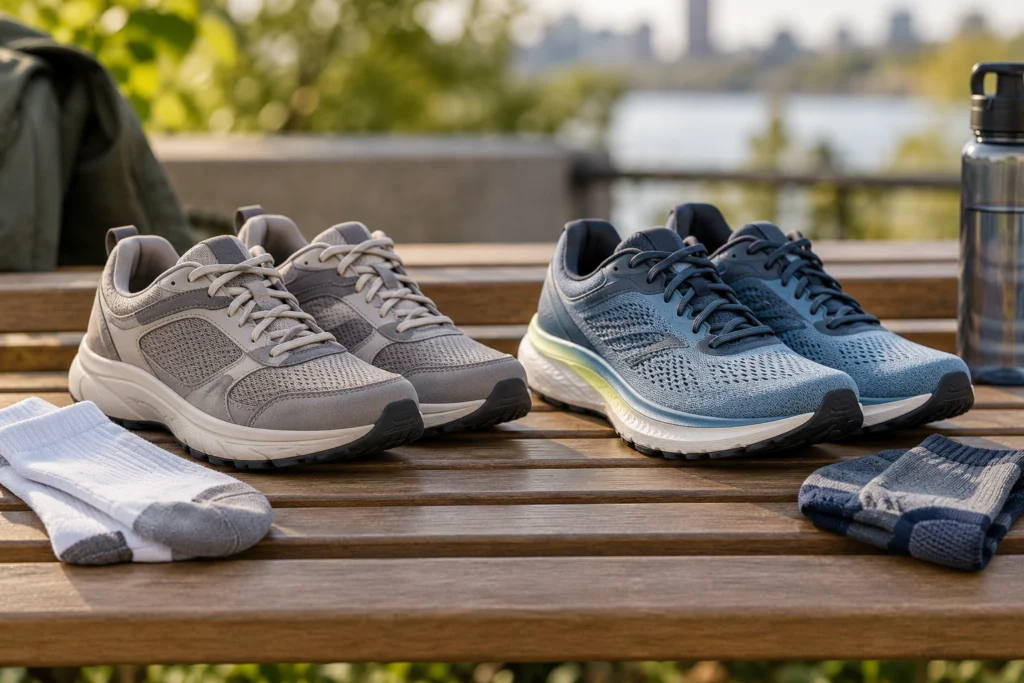
A walking or running label describes an intended use, but it does not guarantee a suitable fit. People use shoes in different ways: a commute, a long standing shift and a run create different practical demands. Start with the activity and your own assessment needs rather than a universal winner.
Describe the main job of the shoe
List the surfaces, weather, time on your feet and any workplace requirements. If you run as well as walk, explain the balance to a knowledgeable fitter. One pair may suit several tasks, but do not assume it meets every requirement equally well.
Take the socks and any prescribed inserts you actually use. Compare the feel of both shoes on both feet in the permitted fitting area. A different width or model shape can matter more than moving up a length size.
| Feature | What to check | Why the category is not enough |
|---|---|---|
| Fit | Toe space, heel hold and pressure | Shapes differ within each product family |
| Activity | Walking, standing or running demands | A label does not describe your whole day |
| Surface | Grip and intended conditions | Indoor and outdoor uses can differ |
| Clinical needs | Advice about pain or prescribed inserts | Marketing is not an individual assessment |
Avoid treating cushioning as a diagnosis
A soft feel may be appealing but does not prove that the shoe addresses the source of heel pain. Similarly, a technical-looking sole does not make a shoe suitable for every person. Ask what specific feature is being recommended and why.
If pain is persistent, severe or changing, seek professional assessment rather than cycling through increasingly expensive shoes. Keep the pair normally worn available for the appointment so the discussion is about real use.
- Try both feet with the socks used for the intended activity.
- Check fastening, pressure points and heel movement.
- Read the return policy before outdoor use.
- Bring a concise activity and symptom record if seeking clinical advice.
Make the purchase a controlled comparison
Compare a small number of plausible options instead of trying every shoe in the shop. Record what felt different and what question remains unanswered. Avoid buying a painful pair on the promise that it must be broken in.
After purchase, follow the permitted trial conditions and note recurring discomfort. Do not add several unassessed inserts at once, because that can change fit and make it harder to understand what is happening.
Questions and answers
Are running shoes always better for walking?
No. Some people find a particular running shoe comfortable for walking, but fit and intended conditions matter. The category alone cannot decide.
Does a shoe designed for heel pain replace assessment?
No. A product claim does not establish a diagnosis or an individual treatment plan. Persistent or concerning symptoms need professional advice.
Should I keep an uncomfortable pair because it was expensive?
Cost does not make a poor fit suitable. Use the return or fitting process available and seek advice rather than forcing prolonged use.
Sources: nhs.uk.