Foot Health Guides
Sports betting during injury downtime: Setting screen-time and spending boundaries
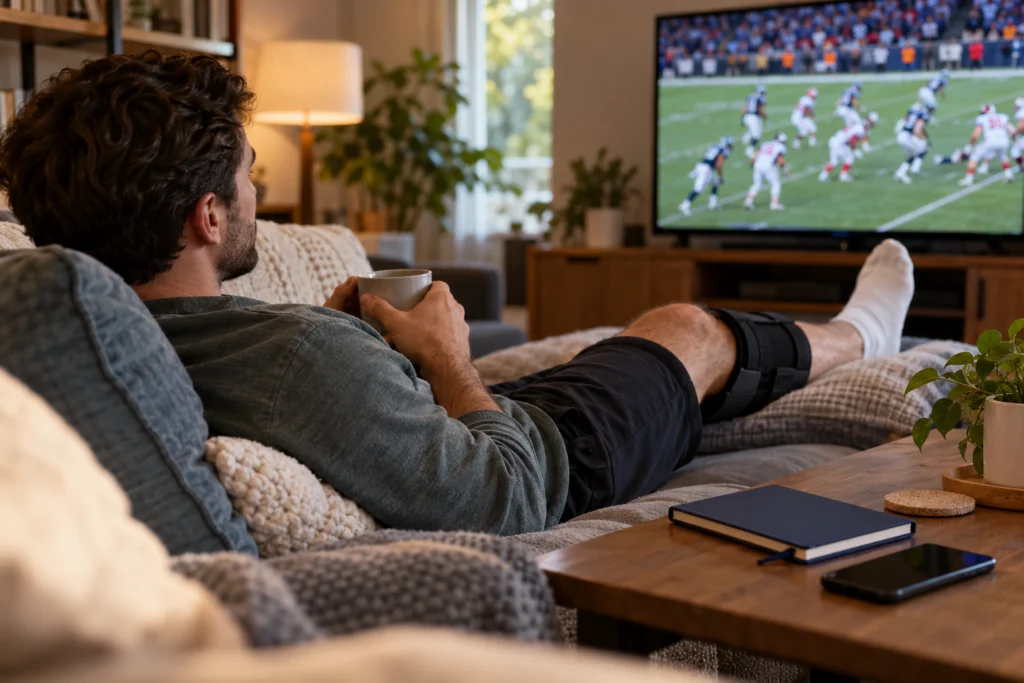
An injury can interrupt the routines that normally structure a week. Watching sport may remain enjoyable when playing is temporarily difficult, but opening a betting app is a separate decision. Gambling is not a rehabilitation activity, a substitute for movement advice or a way to recover income lost during time off.
Separate recovery tasks from optional entertainment
Keep appointments, sleep, social contact and the activities recommended by your clinician in the calendar first. Leave room for entertainment that does not require a stake: a film, a conversation, a game recap or a hobby that suits your current restrictions.
If an eligible adult chooses to gamble where permitted, decide the time and money boundaries before opening the app. Neither a familiar team nor extra hours watching matches makes a result certain. Not gambling is a valid choice and avoids gambling losses.
| Part of the day | Practical boundary | Warning to notice |
|---|---|---|
| Recovery routine | Follow the individual clinical plan | Entertainment displaces appointments or rest |
| Sports viewing | Choose a start and finish time | Continuous odds checking replaces watching |
| Optional gambling | Only money that can be lost, never bill money | Increasing deposits to recover losses |
| Social contact | Keep ordinary conversations and visits | Secrecy or withdrawal around gambling |
Make stopping practical
Use device notifications and account settings to reduce interruptions, and keep payment details private. Do not borrow for wagers or treat a loss as a reason to extend the session. A spending boundary that is raised during a tense game is no longer the boundary you planned.
CAMH explains that gambling harm can affect daily activities and relationships as well as finances. A small balance does not tell the whole story if the activity consumes attention, disrupts sleep or causes conflict.
- Write down non-gambling activities that fit the current recovery restrictions.
- Keep treatment costs and household bills separate from entertainment money.
- Avoid using a bet to cope with frustration, boredom or pain.
- Seek qualified support if stopping feels difficult or gambling is affecting daily life.
Review the week without judging match results
Ask whether the entertainment plan left time for rest, relationships and the recovery activities you agreed with your clinician. A win does not make an unhealthy pattern healthy, and a lost wager does not create a task to win the money back.
If gambling has become the default response to every quiet period, pause and discuss that change with someone qualified to help. Recovery can be demanding enough without adding financial pressure or hiding an activity from people who support you.
Questions and answers
Can betting help rehabilitation?
It should not be presented as treatment or recovery. Any activity programme should come from an appropriate assessment; gambling adds separate financial and behavioural risks.
Does a budget make gambling risk-free?
No. Time, stress, relationships and difficulty stopping also matter. A budget is a boundary, not a guarantee of safety.
What if I am betting mainly because I am bored?
Consider pausing and rebuilding other activities and social contact. If the pattern is hard to change or is causing harm, seek professional support rather than relying on willpower alone.
Sources: camh.ca.