Foot Health Guides
Replacing worn shoes: Signs to look beyond the calendar
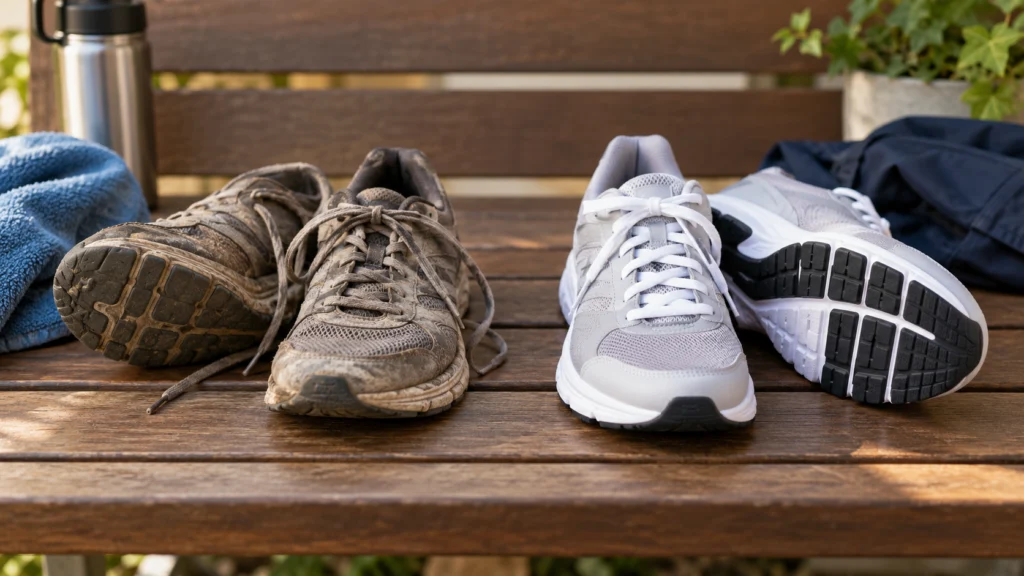
Shoes do not wear identically. Use, storage, construction and the person wearing them all influence their condition. A calendar reminder can prompt an inspection, but it cannot establish that every pair should be replaced on the same date.
Inspect the whole shoe
Look at the sole, upper, fastening and interior. Notice damaged areas, uneven wear, loose components or a change in how securely the shoe holds the foot. Compare both shoes rather than assuming the more visible one tells the whole story.
Check the fit with the socks and any prescribed inserts normally used. A worn lining or altered fastening can affect comfort even when the outer sole still looks substantial. Conversely, a cosmetic mark alone may not make a shoe unusable.
| Area | Observation | Next step |
|---|---|---|
| Sole | Damage, wear pattern or reduced suitability for conditions | Ask a fitter or specialist about replacement |
| Upper | Tears, deformation or fastening problems | Assess whether repair is appropriate |
| Interior | Rough lining, pressure or changed fit | Review the complete footwear combination |
| Use | A new job or activity requirement | Check whether the original design still suits it |
Do not make the shoe the automatic diagnosis
A new pain episode and an old pair of shoes may occur together without the shoe being the only cause. Record the timing and seek professional assessment for persistent or concerning symptoms. Replacing footwear should not delay care.
Ask about repair where a repair is technically suitable, but do not assume every worn component can be restored. A specialist can explain whether the product is repairable and whether the result remains appropriate for its use.
- Inspect both shoes under good light.
- Record the product model if the fit has worked well.
- Check workplace or activity requirements before choosing a replacement.
- Try the new pair properly instead of buying by the old size alone.
Use a replacement as a fresh fitting
A familiar model may change between versions. Try both shoes and check pressure, toe space and heel hold again. Do not assume an identical size number guarantees the same fit across products.
Ask about permitted indoor trials and returns. Avoid discarding the old pair before a clinician or fitter has seen it if the wear pattern is relevant to a current problem. Keep the discussion grounded in actual use rather than a marketing mileage promise.
Questions and answers
Should all shoes be replaced after a fixed number of months?
No single calendar rule suits every pair and user. Inspect condition and suitability, and follow relevant manufacturer or professional advice.
Does uneven wear prove a foot disorder?
Not by itself. A clinician can interpret observations with the history and examination; a sole photograph alone is not a diagnosis.
Can a new pair guarantee pain relief?
No. A better fit may help comfort, but persistent heel pain requires an appropriate assessment and realistic management plan.
Sources: nhs.uk.