Foot Health Guides
Footwear fit: Toe room, heel hold and pressure points
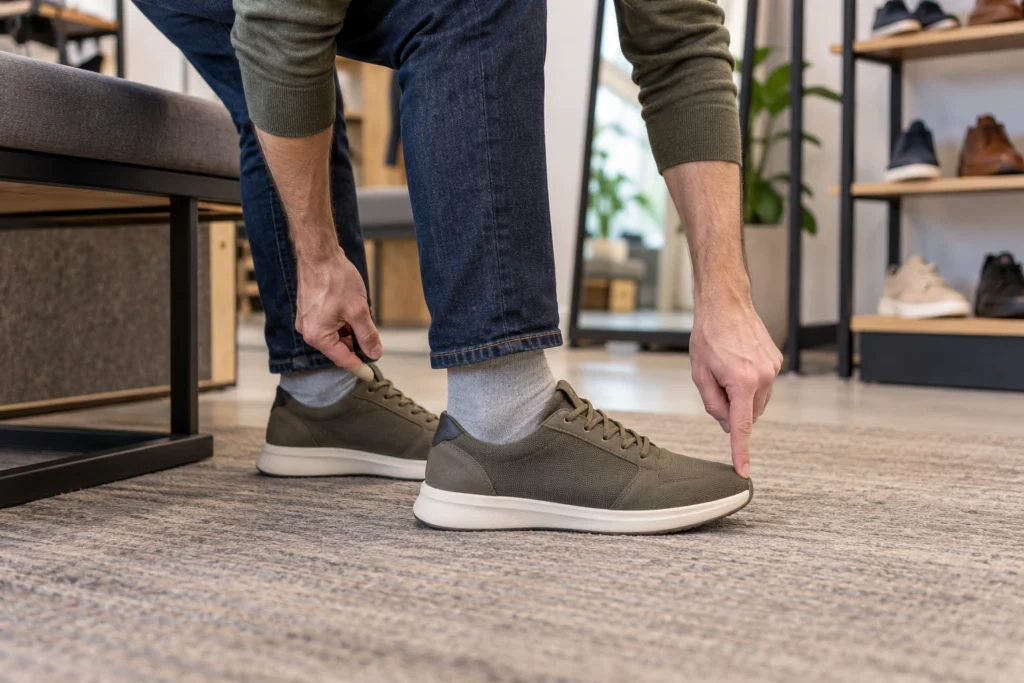
A shoe size is a starting point, not a complete description of fit. Length, width, shape and available volume all matter. A pair can be long enough yet press at the forefoot, or feel roomy while allowing uncomfortable heel movement.
Try the whole footwear combination
Use the socks you expect to wear and bring any prescribed inserts. Try both shoes and fasten them as intended. A loose display fitting can conceal pressure that appears when the shoe is secured normally.
Walk in the permitted area and notice where the foot moves or contacts the upper. Do not choose only by the amount of space at the front. The heel, instep and forefoot need to work together in the selected design.
| Area | Look for | Discuss if present |
|---|---|---|
| Toe area | Space without crowding | Repeated contact or rubbing |
| Heel | Hold appropriate to the activity | Slipping or a painful collar |
| Instep | Comfort with normal fastening | Pressure or difficulty closing |
| Overall shape | A comfortable match to both feet | One area made worse by sizing up |
Change shape before accepting a compromise
A different width or model may solve a problem that extra length does not. Ask a knowledgeable fitter to compare alternatives. Do not assume that a tight area will reliably stretch enough to become suitable.
If one foot feels different, say so. A fitting should account for both feet and the intended activity. Where persistent pain or a health condition affects foot care, an appropriate clinician can advise on relevant considerations.
- Try both shoes with the usual socks.
- Check fit while standing and walking within the shop’s trial conditions.
- Ask about another width or shape when a pressure point remains.
- Read the return policy before wearing shoes outdoors.
Keep pain separate from ordinary preference
You may prefer a firmer or softer feel, but significant discomfort should not be dismissed as an aesthetic preference. Record where it happens and seek fitting advice. If symptoms are persistent, severe or changing, arrange professional assessment.
After any approved trial, inspect the shoe and note recurring problems. Avoid solving every issue by adding another insert: that changes volume and may introduce pressure elsewhere. A fitting adjustment should have a clear reason.
Questions and answers
Should my toes touch the end?
Ask a fitter to assess suitable space for the shoe and activity. Repeated contact, crowding or pressure is a reason to reconsider the fit rather than relying only on the size label.
Does heel movement always mean the shoe is too large?
Not necessarily. Shape, fastening and the particular design may be involved. Compare alternatives instead of assuming a smaller size is the only answer.
Can fit advice replace treatment for heel pain?
No. It can support a footwear decision, but it does not establish the cause of pain or replace an individual management plan.
Sources: nhs.uk.